

The soil evaluation that decides your septic system
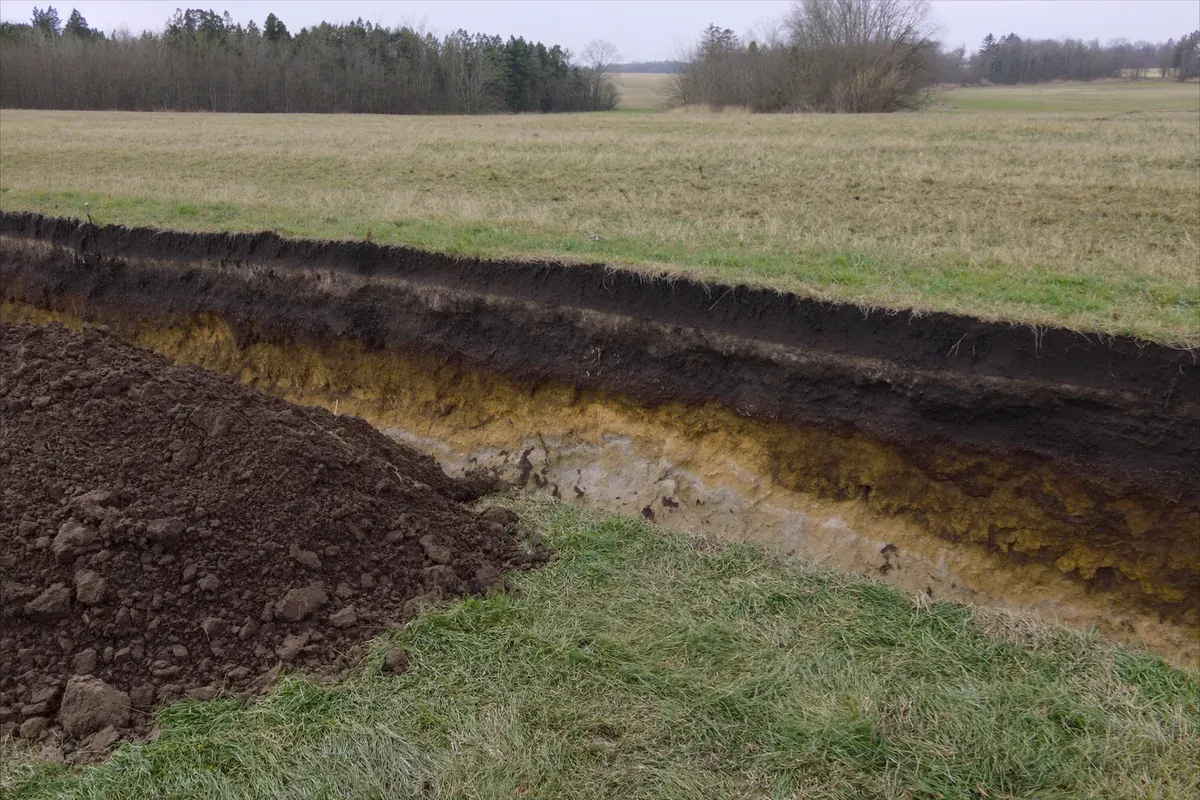
Before an Indiana county will issue a septic construction permit, somebody has to go out to the property and describe the soil. The state rule requires an on-site evaluation including a description of the soil profile, recorded to a depth of five feet or until a layer is reached that cannot be read, and it requires a soil scientist to do the describing using federal NRCS guidelines. The same evaluation is required before a soil absorption field is replaced or altered. That profile, more than anything else, decides what kind of system you are allowed to build and what it will cost.
What exactly does the rule require?
Before any construction permit is issued, and before a soil absorption system is replaced or altered, an on-site evaluation including a description of the soil profile has to be conducted. The soil is described by a soil scientist using NRCS guidelines, and the profile is recorded to a depth of five feet or until a layer is reached that cannot be read.
Source: 410 IAC 6-8.3-56(a) to (c), rule as revised March 28, 2024, read 2026-09-20.
Is this the same thing as a perc test?
People use the two words as though they were interchangeable, and in Indiana the thing the rule asks for is a described soil profile rather than a timed water-drop test. A soil scientist reads the horizons in a pit or a boring and writes down what is there. That description is what the county reviews.
Who is qualified to do it?
A soil scientist, per the rule, working to NRCS soil manuals and handbooks. The Indiana Department of Health publishes a registry of registered soil scientists along with a map of the counties each is willing to serve, which is the practical place to start if your contractor does not already work with one.
Source: 410 IAC 6-8.3-56(a) to (c), rule as revised March 28, 2024, read 2026-09-20.
Why does the profile change the price of the job?
Because it decides the system. Deep, well-drained soil supports a conventional trench field. A high water table, dense glacial till or shallow bedrock pushes the design toward a mound, drip distribution or a treatment unit, and those cost more to build and more to maintain. Nobody can quote your system honestly before the soil is read, which is why a quote given over the phone without a soil profile is a guess.
What happens if the soil will not take a system?
It happens, and it is better to find out before you buy the land than after. The evaluation can send the design to a different part of the property, to an engineered system, or in a small number of cases to a conclusion that the lot cannot be served as planned. A county cannot issue a permit the soil does not support.
Get a soil evaluation and design quote
Tell us the county and the job. No email needed.
A marketing service, not a licensed contractor. Septic work is performed by independent local contractors.
Need the job done, not just the rule explained
Your request goes straight to an independent local septic contractor serving your Indiana county, usually within about an hour during the day, not a national lead list.
Tell us the county and the jobLast reviewed 2026-09-20.